Restaurant Ops Suite · Hospitality · Co-Founder & Founding Designer
Timo for Silver Light: Unified Restaurant Operations
A Guangzhou teahouse with daily queues ran its approvals on paper, group chats, and personal favors. He led strategy and design for an iOS suite that measures performance, routes approvals to the right person, and leaves service routines intact. This case walks through the product decisions behind the pilot metrics.
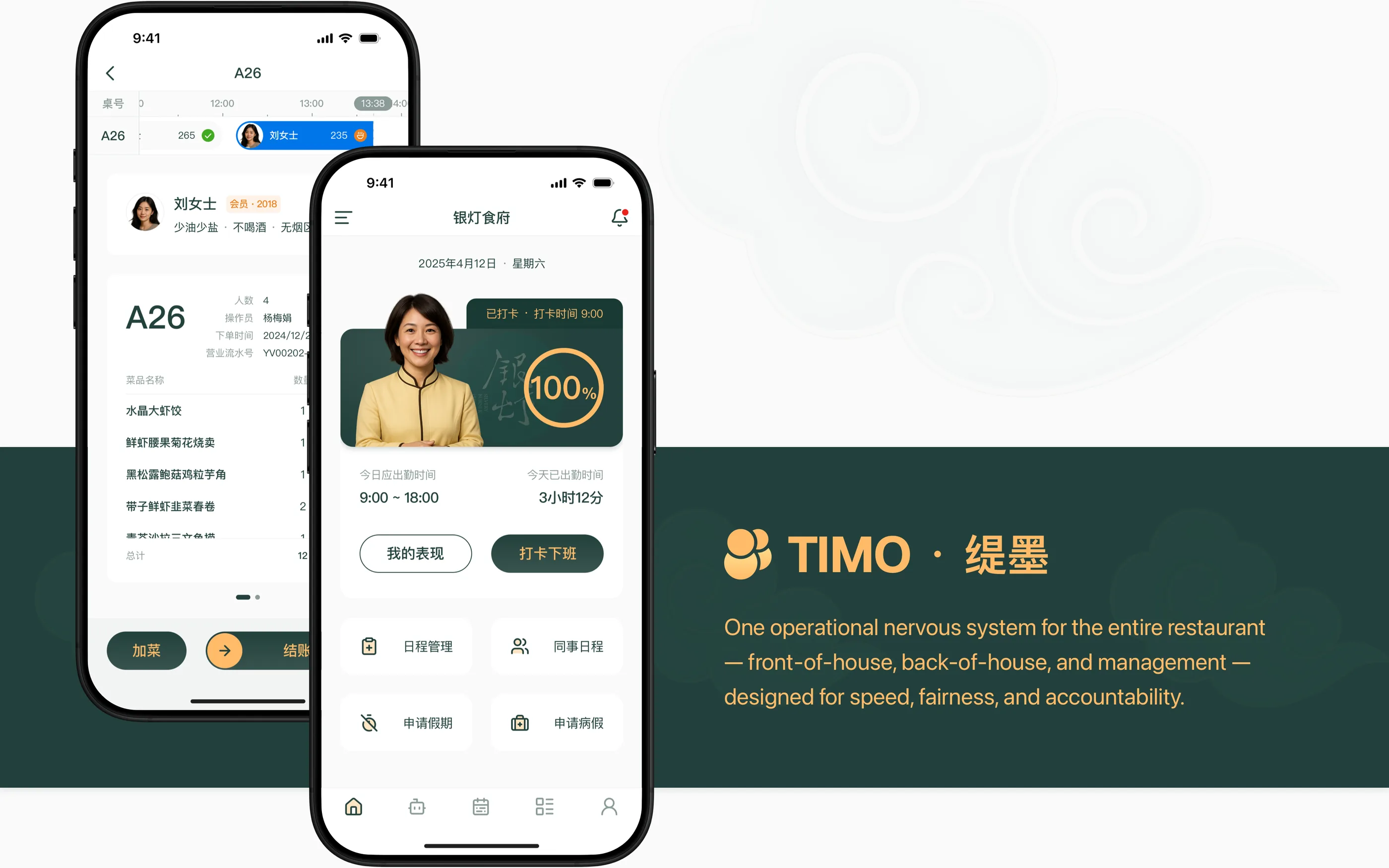
- Domain
- B2B SaaS · Restaurant Operations · Workforce, Procurement & Queueing
- Deliverables
- Mobile & Tablet Apps · Manager Console · Design System · Role & Governance Rules
- Scope
- Field Research · Workflow Mapping · UX/UI · Governance & Policy · Rollout Enablement
- Timeline
- 6 months during the founding period · Discovery → Pilot rollout → Chain-wide deployment playbooks
What Silver Light needed Timo to prove
Parent product, flagship deployment
Timo is a workforce and operations platform built around five purpose-built zones: Home, Shifts, Requests, Messages, Profile. Each zone owns one area of responsibility. Every action has a named owner, a policy behind it, and an audit trail. That structure is how we explained a multi-surface rollout to the people running the floor.
Silver Light is a Guangzhou teahouse icon with daily queues and staff spanning several generations. The brief was to modernize operations without thinning out the hospitality. One iOS suite for FOH/BOH/management that measures performance, ends back-channel favors, and moves approvals into software, without disrupting the rituals or the pace of service. The case below documents the trade-offs behind the pilot numbers (25% / 18% / 90%).
Trust as the design constraint
Receipts mattered more than cheerful dashboards
Most restaurant ops software opens with bright dashboards, gamified shift trades, and marketing-style onboarding. None of that survives a Saturday-night dim-sum rush. The constraint that mattered for Silver Light was trust: receipts, audit trails, role contracts, and response times staff could see. Three design principles followed.
- Fitts’ Law in the field: primary actions sit within thumb reach at ≥48 pt, so gloved staff hit them without breaking stride. Mis-taps and retries drop.
- Offline receipts: every punch, correction, and roster change writes an auditable receipt that syncs the moment connectivity returns. Payroll holds up even when the Wi-Fi drops.
- One task per screen: one intent per screen, plain language, details revealed only when needed. New staff stay oriented and managers keep the full controls.
Trade-off 1
Mobile-first vs tablet-first for the front-of-house console
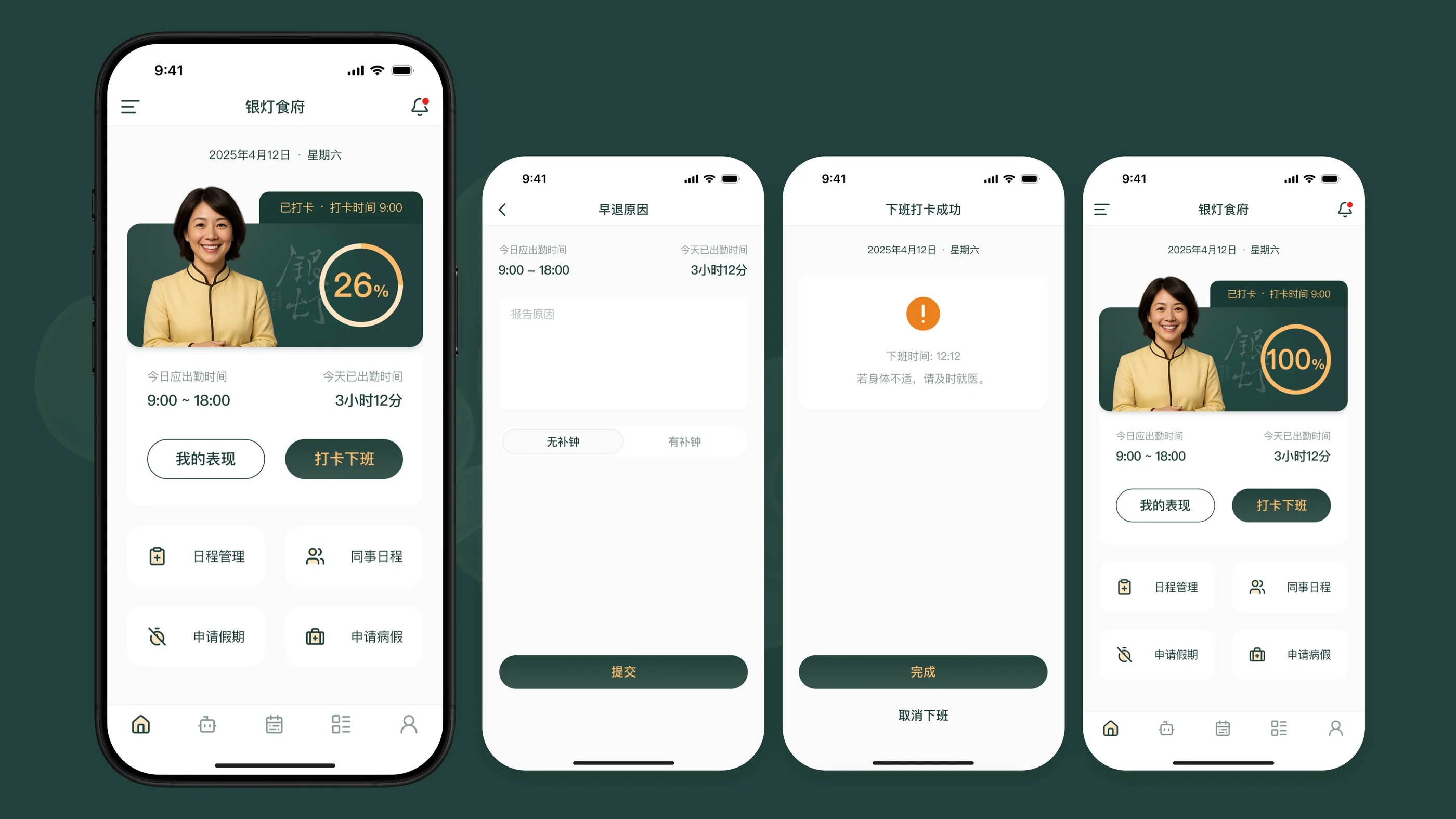
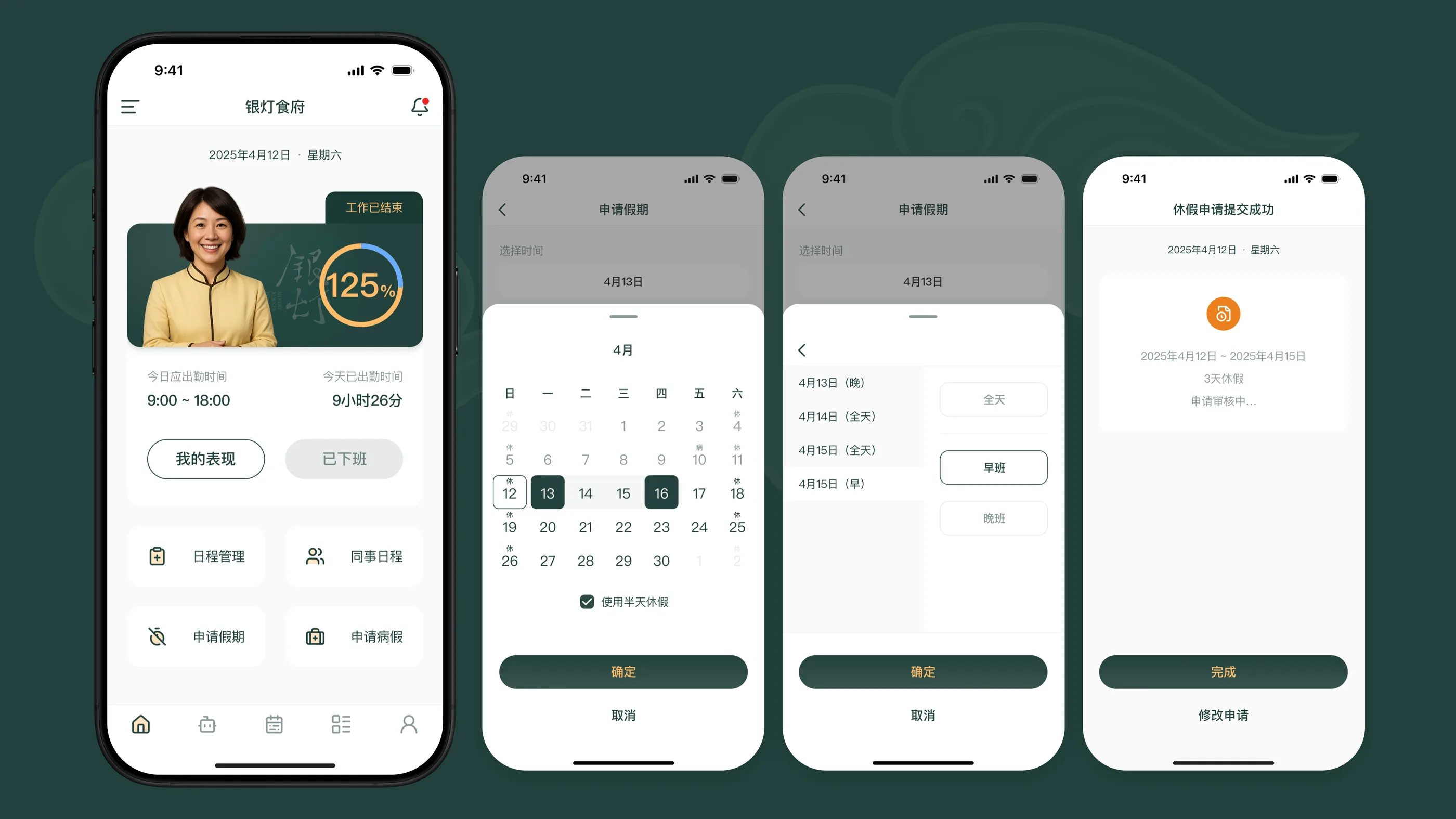
The safe call was tablet-first: more screen, simpler IA, familiar to hospitality vendors. I chose mobile-first instead. The trade-off was ergonomics vs information density. FOH staff have no free hands for a tablet during peak. They need one-tap actions in the thumb zone that still work with a tray in the other hand.
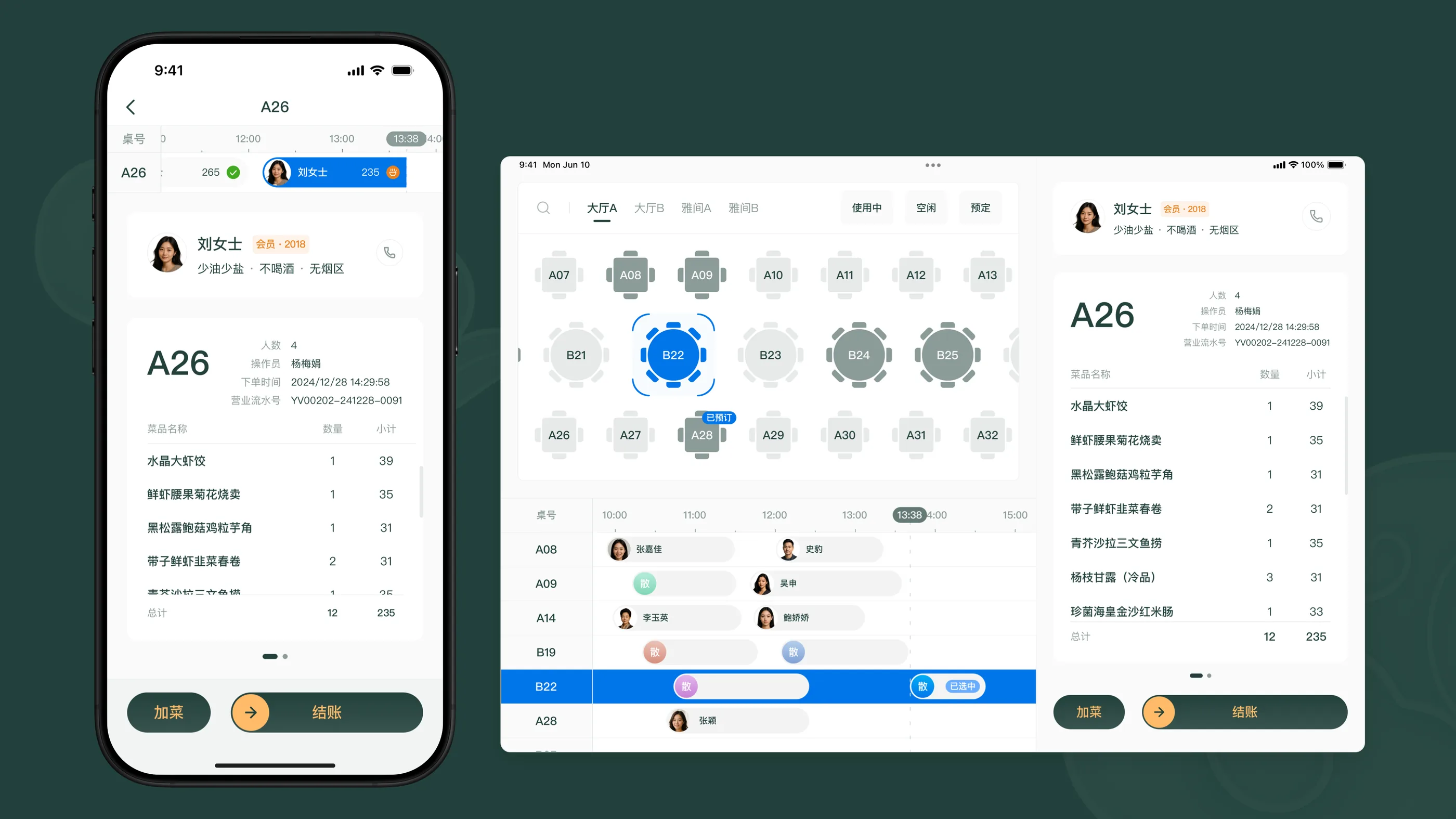
Tablet stays in the suite for managers and area leads, where the density pays off and the ergonomics pressure eases. The FOH console runs on iPhone, with clock-in/out, queue actions, ordering, and incident capture all reachable by one thumb. Much of the 18% queue-wait reduction rests on that decision.
Trade-off 2
Procurement governance: approval matrix vs flat permissions
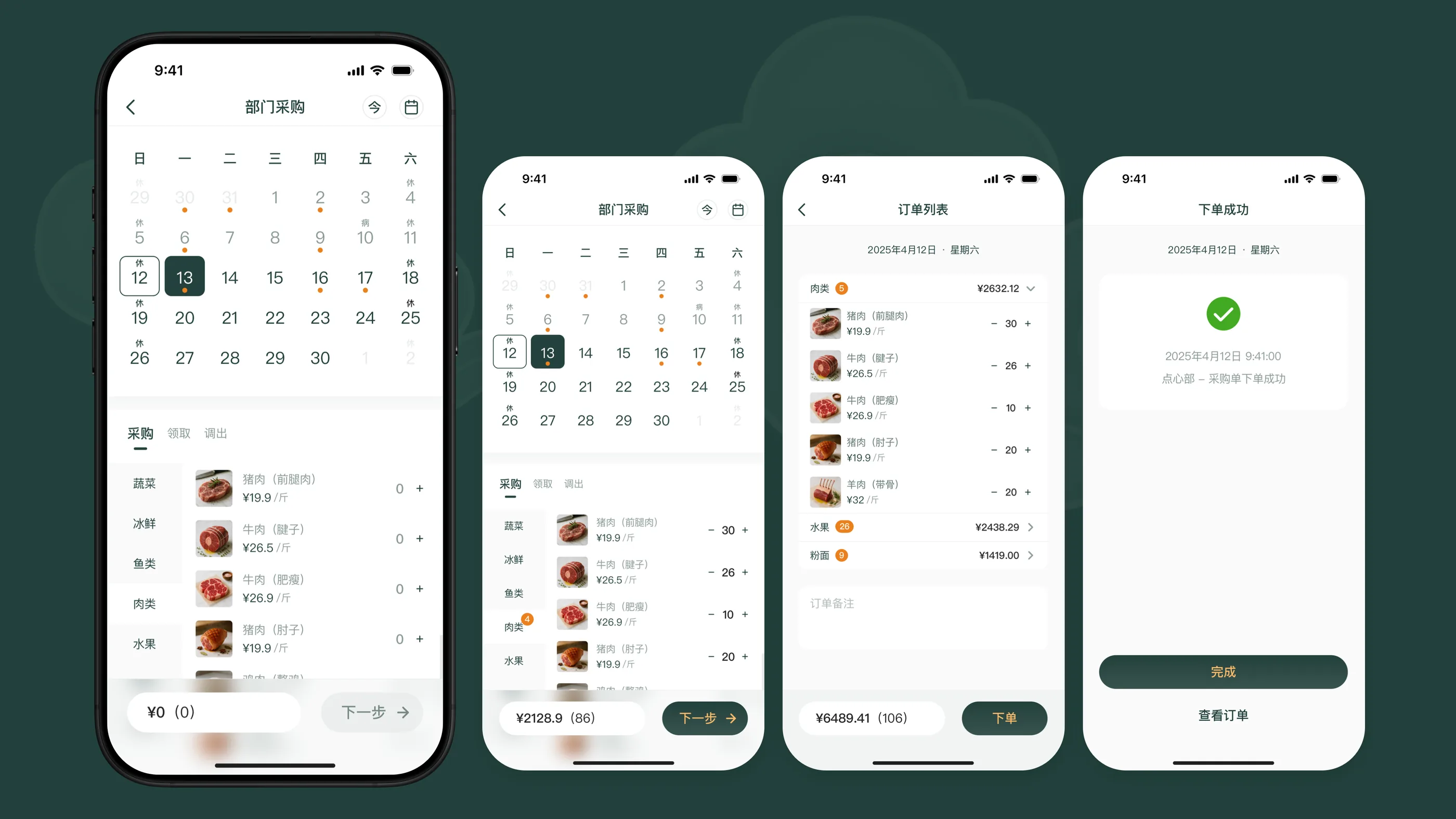
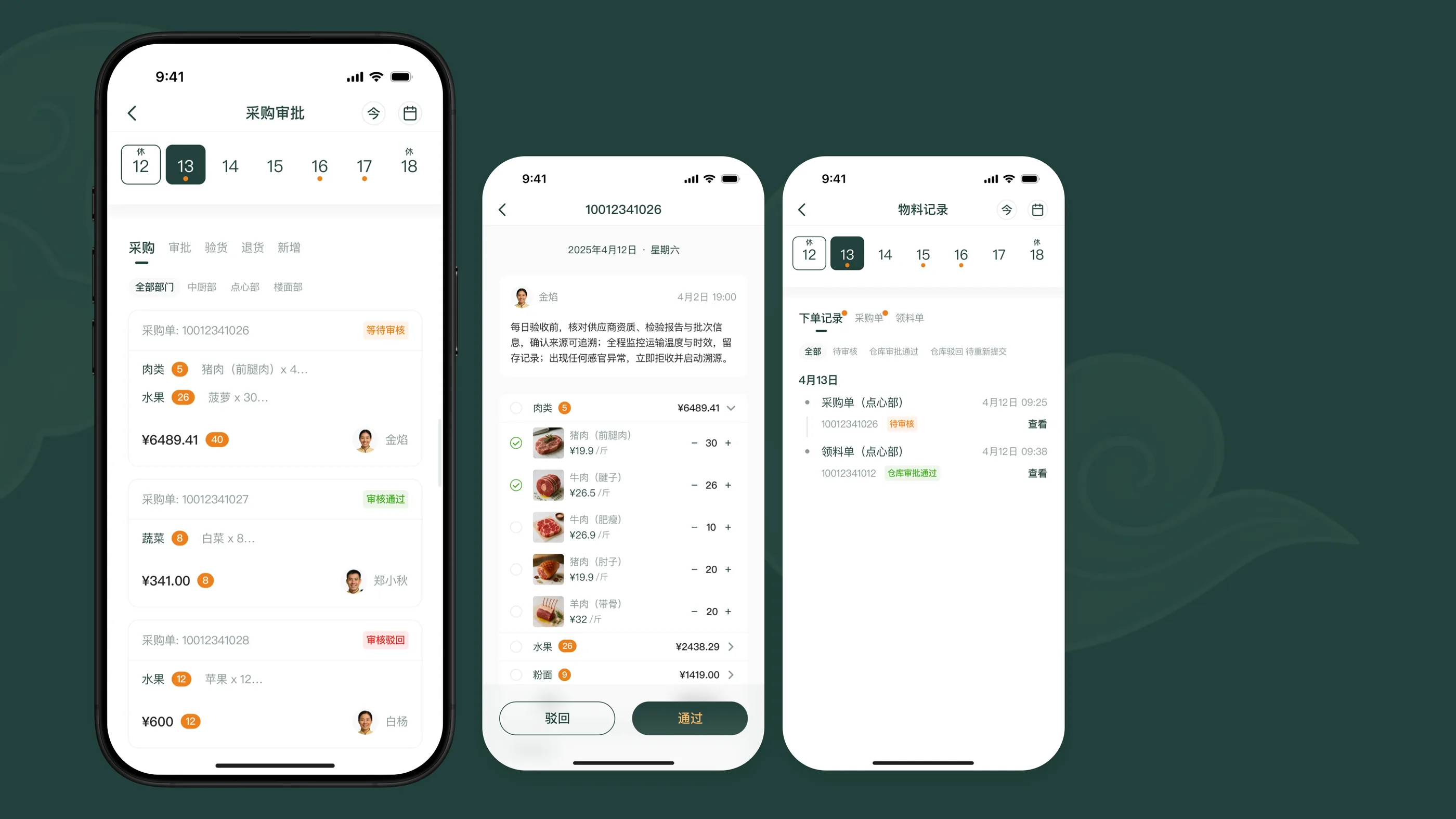
Silver Light’s real pain was approval disputes: back-channel favors and verbal overrides. Flat permissions ease friction for approvers but leave audit risk wide open. A role-based approval matrix adds steps, but every step is named, timestamped, and signed. I chose the matrix. That decision drove much of the 90% reduction in approval disputes.
Departments build itemized orders by category and vendor. The system totals quantities and prices before it routes anything for approval. Line items, edits, timestamps, and warehouse receipts take the place of favors, so spend stays visible from request to delivery.
Trade-off 3
Queue management: wait-time visibility for staff only, or for guests too
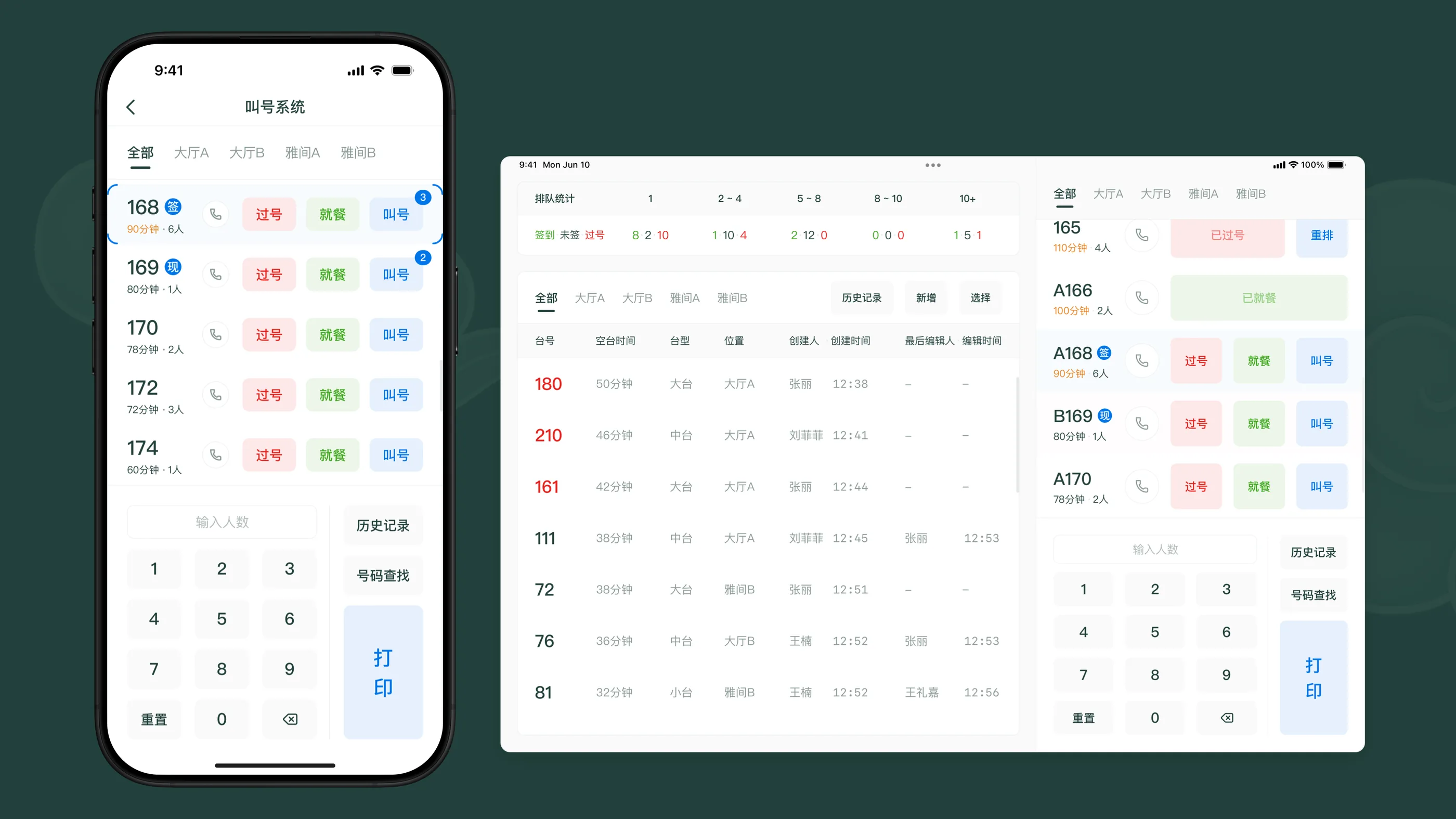
The trade-off was guest expectation management vs operational pressure. Show guests a wait time and you anchor expectations the floor can’t always meet at Saturday peak. Hide it and guests keep asking the host stand, which slows throughput. I put live waits in front of staff with clear time targets, then sent guests a paged-when-ready text. Guests still get the “your table is ready” moment without leaning on a time estimate.
More of what shipped
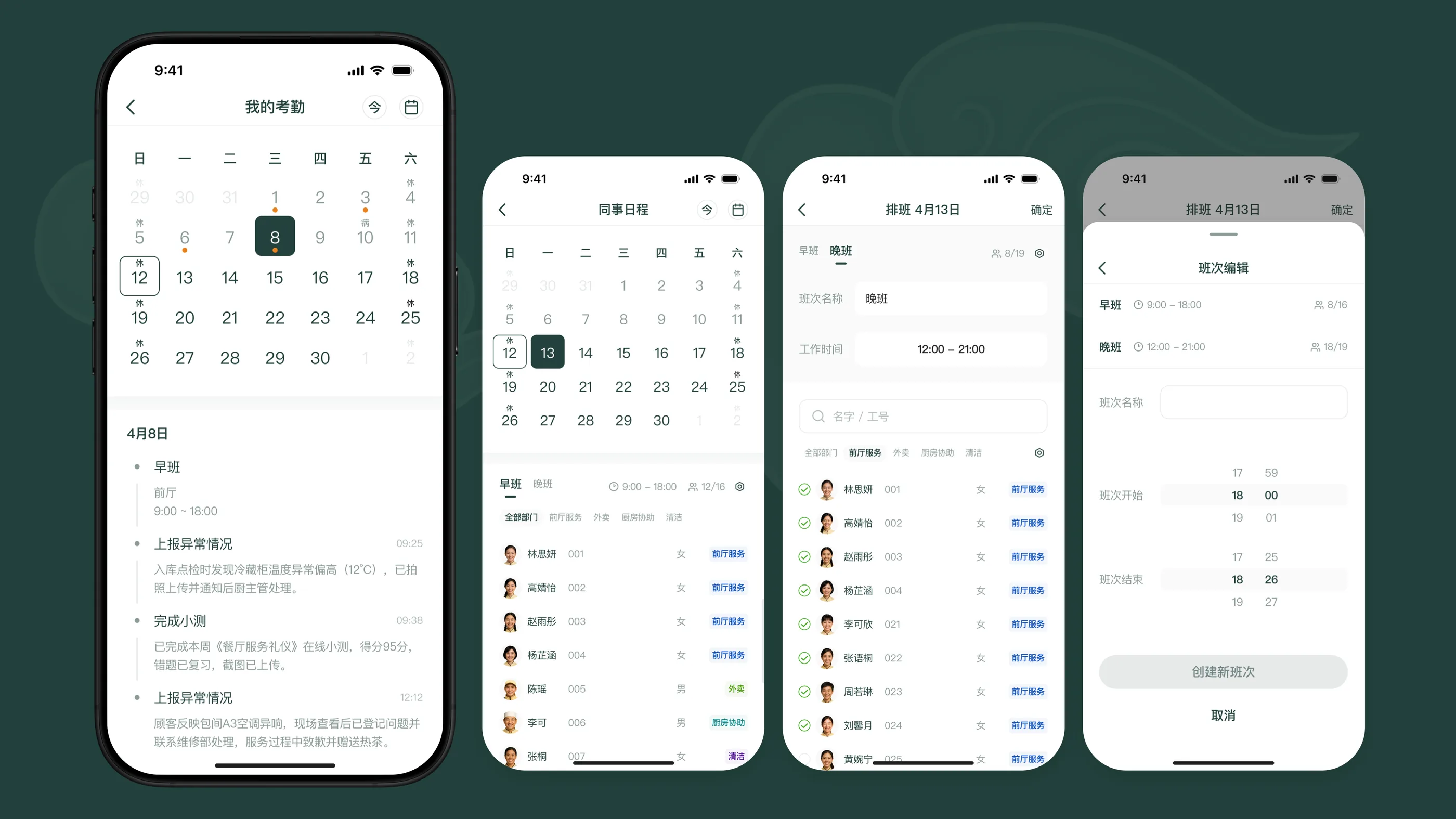
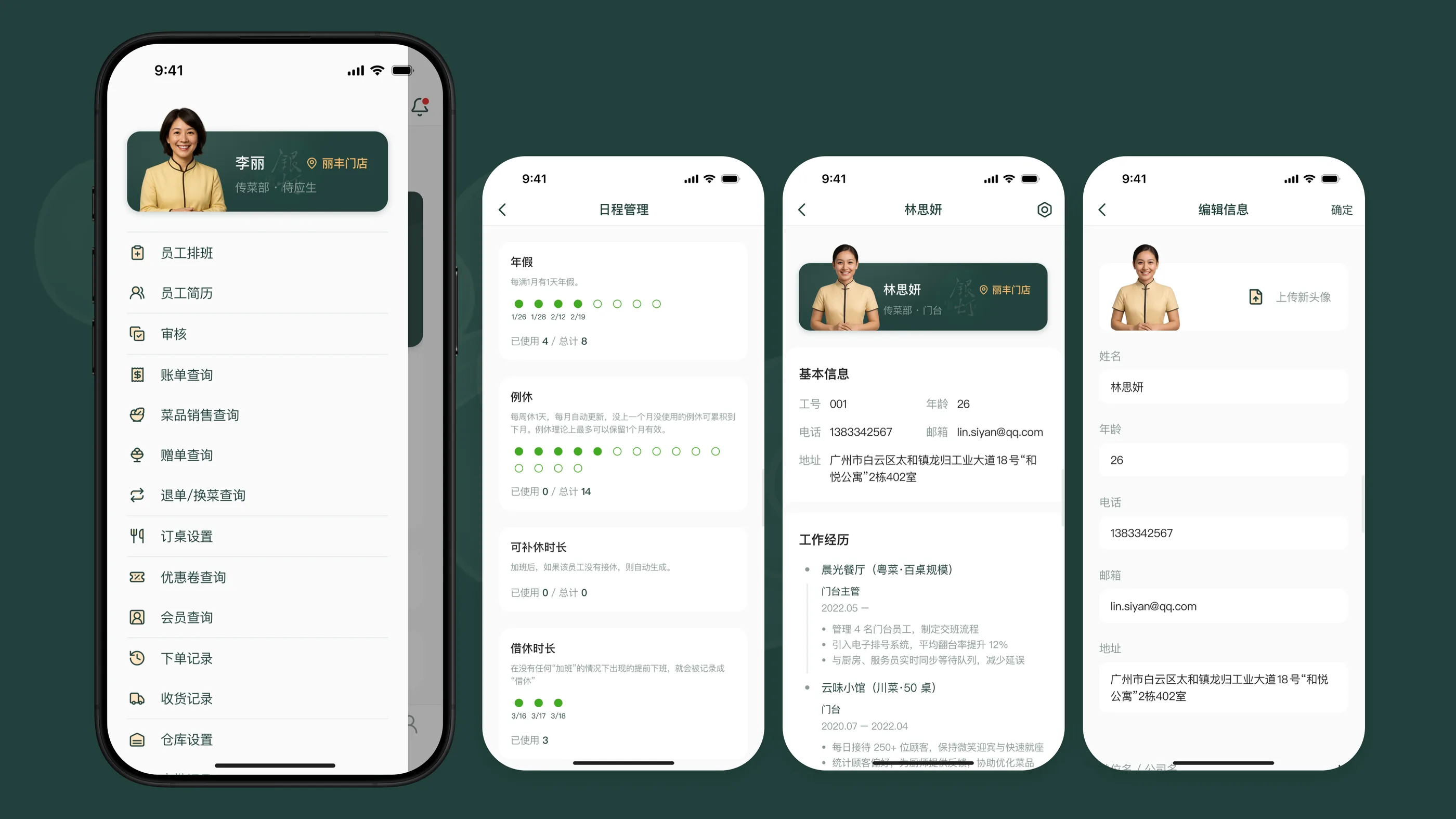
Workforce, scheduling, ordering, admin
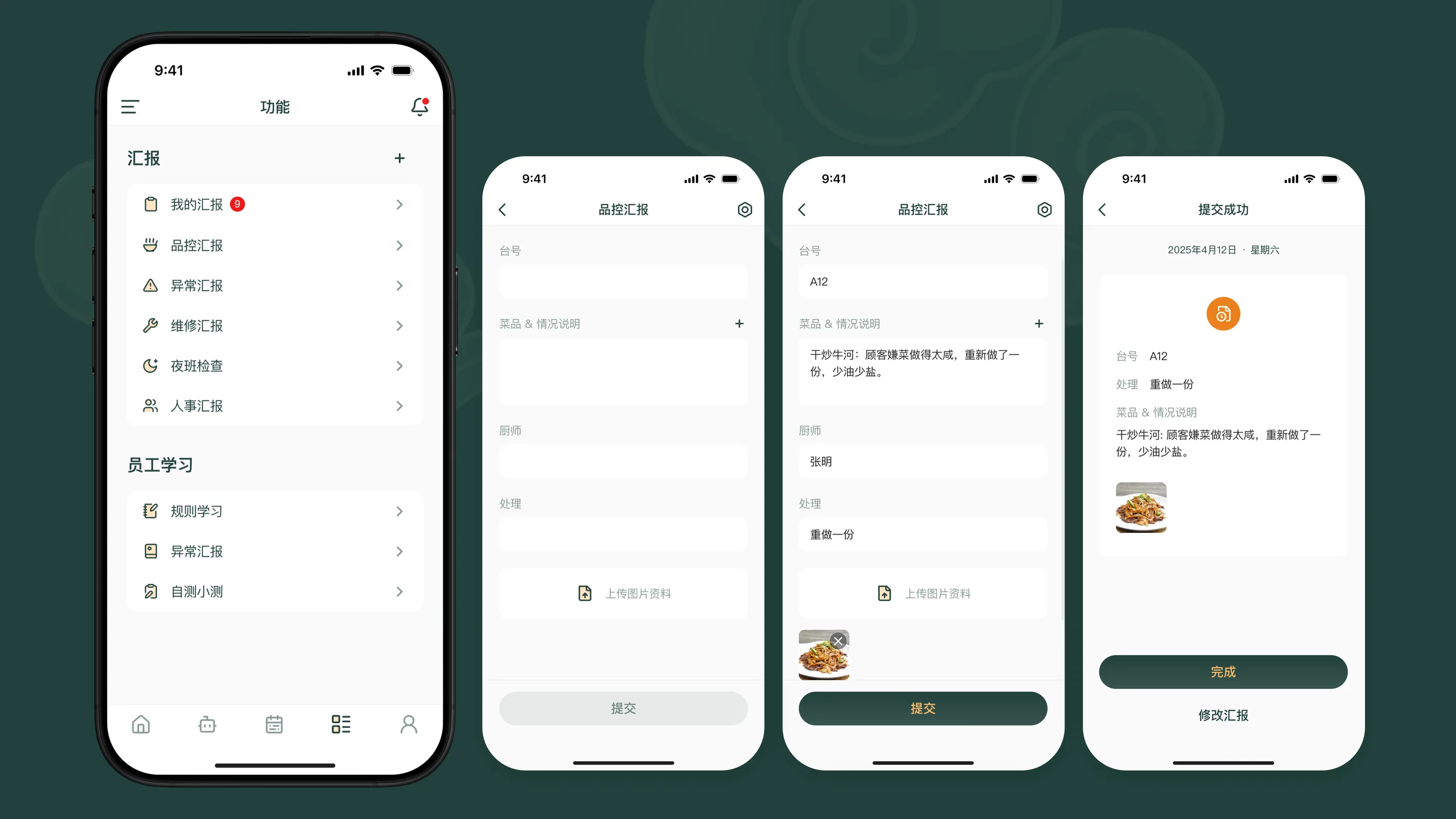
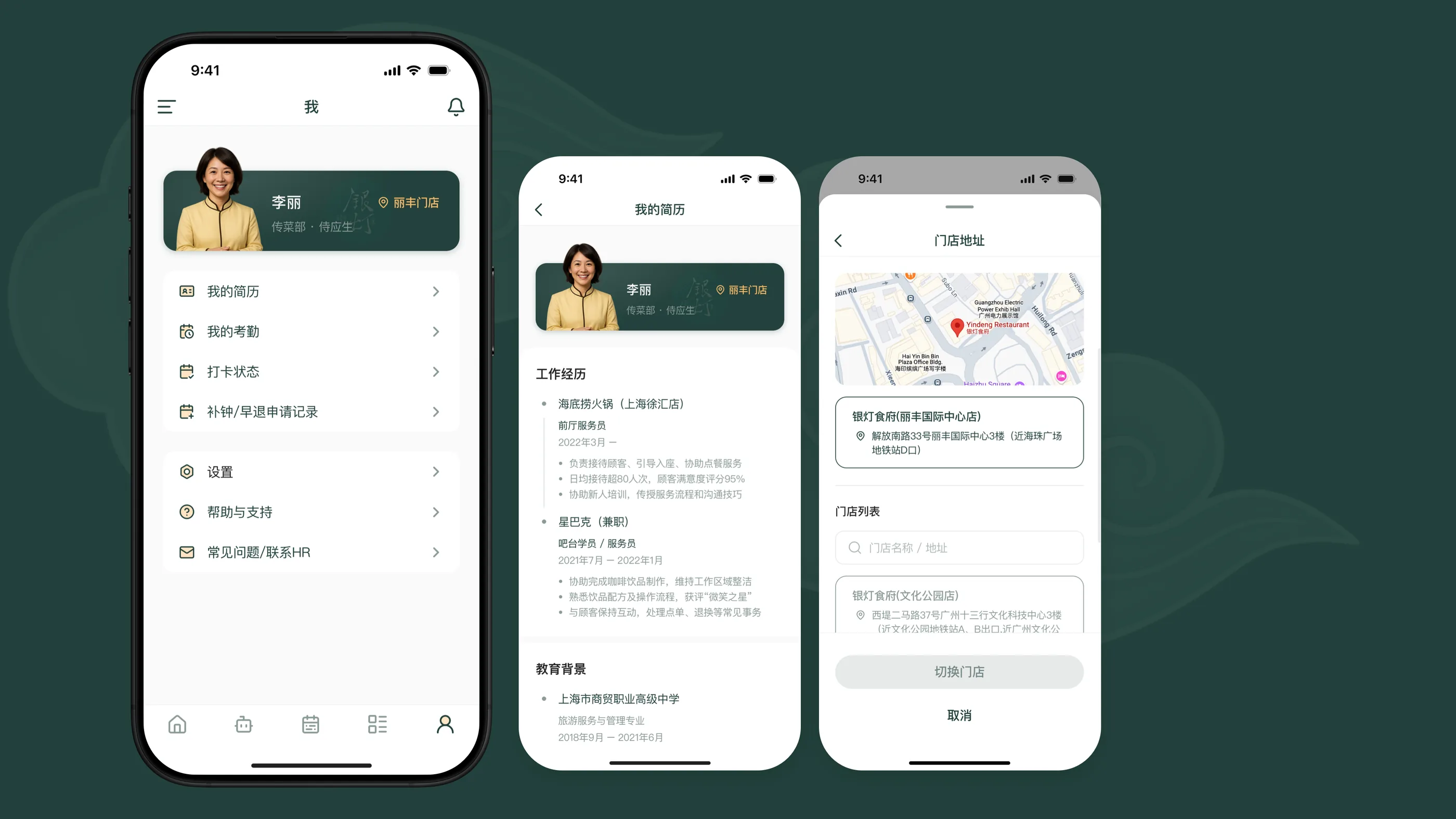
Past the three trade-off calls, the screens below follow one rule. Every action a manager or staff member takes leaves a record: who did it, when, and why. Across workforce, scheduling, ordering, and admin, the floor stops running on memory and starts running on receipts.
Visual language
Identity and components that carry trust
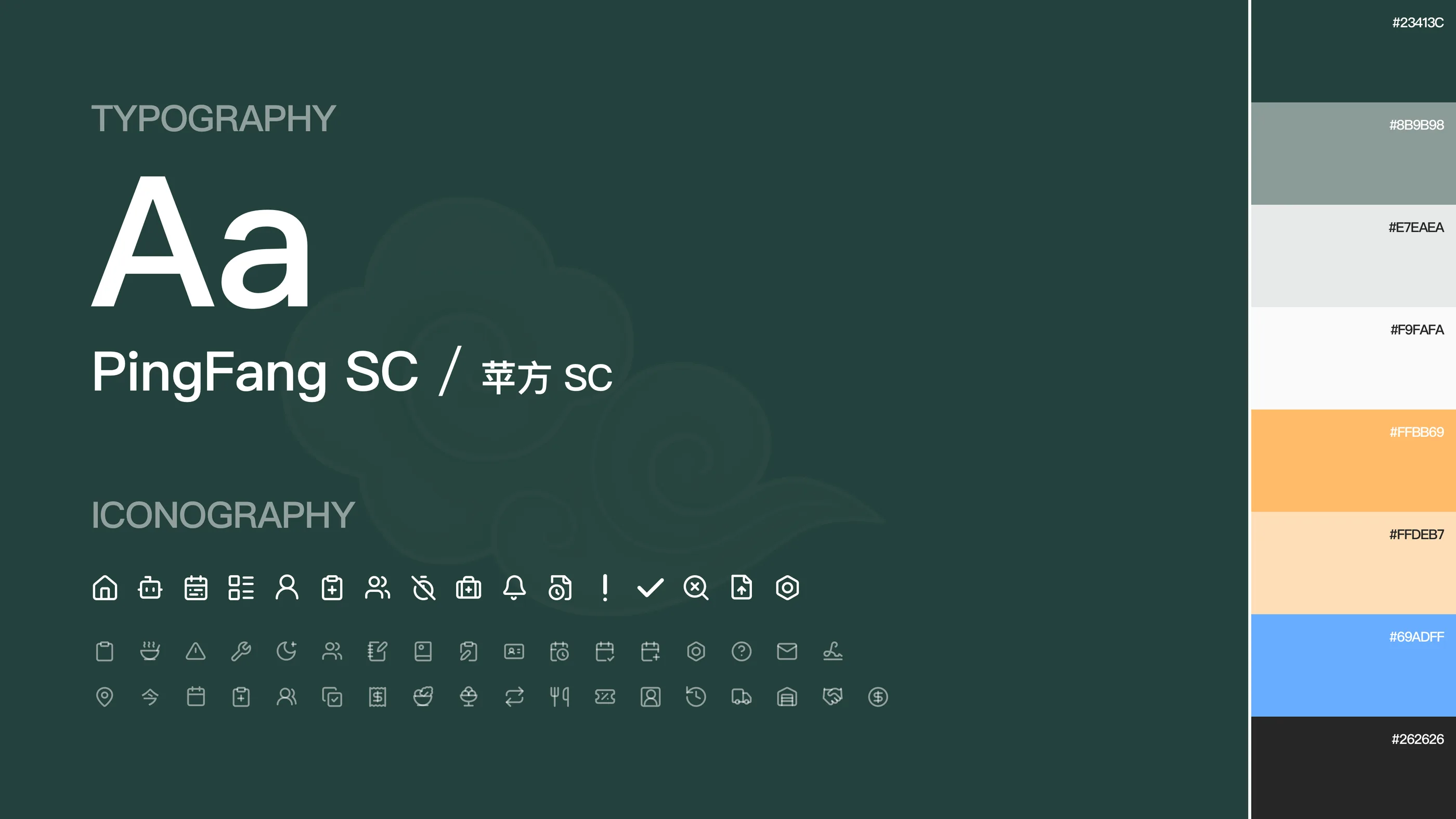
Silver Light’s heritage jade pairs with a modern UI kit of cards, list rows, queue chips, and approval banners. Components carry roles and localization, hit contrast targets for kitchen lighting (WCAG AA), and run in light or dark mode without breaking the brand. PingFang SC type handles the Chinese-language surface, and role-cued status colors let an approval banner read in one glance at peak hour.
Outcomes the pilot proved
Operational wins, fairness, measured
- Ops hours ↓ 25% (pilot). Handoffs dropped, and staff stayed with guests instead of cycling through approval queues.
- Queue waits ↓ 18%. One-tap actions and visible SLAs cut the median queue wait across the pilot stores.
- Approval disputes ↓ 90%. Role-based audit trails replaced verbal overrides, and favors lost their hiding place.
- Reusable operating pattern. The role-contract pattern, the audit-trail row, and the modular UI kit became the base for the next Timo deployment, including the international edition documented in the next case.
Reflection
What this taught about scaling a parent product to a chain
The hard part wasn’t the design system or the IA. It was negotiating the policy layer: what counts as an approval, who owns a dispute, what an audit trail means when a manager is also an investor’s nephew. The product had to encode a fairness contract the floor would actually trust. That negotiation took longer than the build, and it’s the part I’d budget more time for next.
The next chain rollout is queued. The playbooks, training kit, governance rules, and audit-trail rows are what carries over to the next deployment.
What I carry forward
Hospitality staff won't fight friction. If a feature takes more than two taps under pressure, it doesn't get used. That rule now shapes how he scopes every mobile-first enterprise tool he builds.